IMPORTANT DATES
| Meeting Information and Deadlines | |
|---|---|
| Meeting Date | March 11 – 14 |
| Registration Opens | November 2 |
| Hotel Deadline | January 8 |
| Abstracts Due | January 8 |
| Registration Deadline | January 8 |
| Meeting Logo Competition | January 8 |
| Meeting and travel support | |
| Expanding Institutional Access (EIA) | December 4 |
| Disciplinary Breadth (DB) | December 4 |
| MaGNET | December 4 |
| ROOT & SHOOT | December 4 |
| Student Hotel Support | December 19 |
| Broadening International Participation (BIP) | January 29 |

Meet the Speakers
-
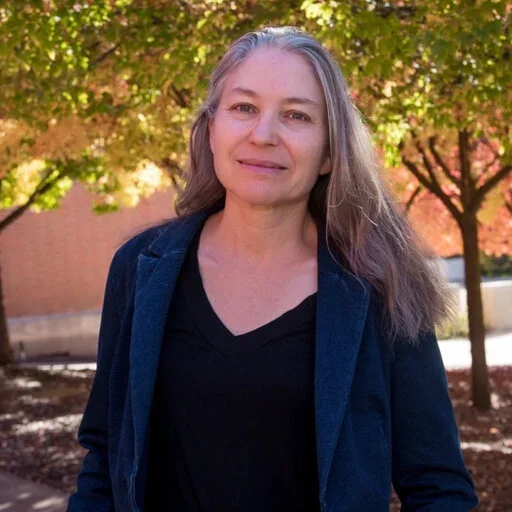
Marilyn Warburton, USDA ARS Plant Germplasm Introduction and Testing Research Unit
From Genebanks to Genomes: The More I Saw in Maize Diversity, the Less I Thought I Knew
Marilyn Warburton is the Research Leader of the USDA ARS Plant Germplasm Introduction and Testing Research Unit in Pullman, WA. She earned her B.S. and M.S. degrees from the University of Arizona and her Ph.D. in plant genetics from the University of California, Davis. Marilyn leads the team that collects, maintains, evaluates, characterizes and distributes over 100,000 accessions of important plant genetic resources for the U.S. National Plant Germplasm System. Previously, she spent 13 years at the ARS Corn Host Plant Resistance Research Unit seeking useful allelic diversity to create maize breeding lines with resistance to biotic stresses; and 10 years before that at the International Maize and Wheat Improvement Center studying the diversity in the maize and wheat genebank collections. In her research, she has sought to identify and use natural allelic diversity to increase biotic and abiotic stress resistance and nutritional quality for important crop species. Marilyn is a past president and elected Fellow of the Crop Science Society of America and counts as her highest honor the trust of the many students and colleagues whom she has mentored over the years of her career.
-

Bob Schmitz, University of Georgia
Using epigenomics to unlock maize regulatory variation
Bob Schmitz is a Distinguished Research Professor in the Department of Genetics at the University of Georgia. He earned his B.Sc. in Molecular and Cellular Biology from the University of Arizona and his Ph.D. in Genetics from the University of Wisconsin–Madison, followed by postdoctoral training in plant epigenomics at the Salk Institute.
His laboratory investigates how plant genomes and epigenomes generate variation in gene expression, development, and phenotype. A longstanding focus of the lab is understanding how epialleles arise, how they are inherited, and how epigenetic variation can be used to measure divergence events during the last decades or centuries. His group also uses evolutionary and comparative genetics to study regulatory variation within and between species, providing insight into how gene-regulatory systems evolve and contribute to phenotypic diversity. The lab develops genomic, single-cell, and spatial approaches to identify cis-regulatory elements, define their functions in crop genomes, and connect genetic variation with differences in gene expression and traits. More recently, his group has been developing AI-based sequence models to study regulatory grammar and determine how the identity, arrangement, and interactions of regulatory elements encode cell-type-specific and environmentally responsive gene expression.
-

Steve Moose, University of Illinois at Urbana-Champaign
Selection, Mutations, and Discovery for Maize Responses to Nitrogen
Steve Moose is the Alexander Professor of Maize Breeding and Genetics in the Department of Crop Sciences at the University of Illinois. He earned his B.S. degree in Biology from Case Western Reserve University and Ph.D. in Genetics and Crop Science from North Carolina State University. Following postdoctoral research at the University of California-San Diego and time as a Project Leader at Dekalb Genetics Corporation, he joined the University of Illinois faculty in 1999. Steve’s research focuses on discovering genes for improving the productivity, value, and sustainability of corn and related crops. Recent research has focused on increasing nutrient use efficiency in corn and biotechnology improvement of sorghum and Miscanthus for bioenergy applications. Dr. Moose teaches courses on topics of biotechnology and genomics, has advised 30 graduate students, and mentored research experiences for more than 100 undergraduate students. He also frequently engages with farmers and the public about technology advances in crop improvement.
-
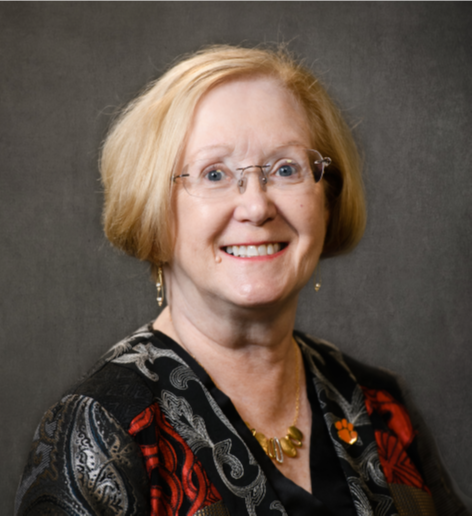
Trudy F. C. Mackay, Clemson University Institute for Human Genetics and Department of Genetics and Biochemistry
The Genetic Architecture of Quantitative Traits: Lessons From Drosophila
Trudy Mackay is the Director of the Clemson University Institute for Human Genetics and the Self Family Endowed Professor of Human Genetics. Her research focuses on understanding the genetic and environmental factors affecting variation in quantitative traits and rare and common human diseases. Her work identifies the genetic loci and causal molecular variants affecting genetic variation in populations, including genetic modifiers of rare diseases. She is a Fellow of the American Academy of Arts and Sciences, the Royal Society of London, the US National Academies of Sciences and Medicine, the American Philosophical Society and a 2016 Wolf Prize Laureate.
-

CODIE Speaker (TBD)
-
McClintock Prize awardee (TBD)
In addition to the keynote speakers listed above, the 2026 McClintock Prize Awardee (to be announced in the Fall of 2026) will give a presentation on their work.
The maize community is grateful
for the generous support from these sponsors: